





ERICH PEHAP MODERN WORLD
 -
-  Haus Gallery
Haus Gallery presents the exile-period works of the renowned and timeless artist Erich Pehap, whose work has also featured and received recognition over the years in our art auction selections. The exhibition mainly showcases the artist’s drawings and graphic works, along with a number of watercolours and pieces created using pastel techniques.
Erich Pehap received his artistic education in Tartu in the 1930s, studying from 1932 to 1936 at the legendary Pallas Art School. His main mentors were Ado Vabbe and Hando Mugasto, both key figures of modernist graphic art and painting in Estonia, who laid the foundation for the young Pehap’s modern and modernist way of thinking. At Pallas, Pehap focused primarily on graphic art, quickly emerging as one of the most talented artists of the school’s younger generation. Later, Pehap became widely known for his work in painting, graphic art, and design alike.
Pehap fled Estonia in the turmoil of war in 1943, escaping to Finland, where he continued his professional development and took part in the Helsinki art scene. In 1944 he moved to Sweden, working mainly in Stockholm, participating in local exhibitions and further refining his skills, particularly in linocut and woodcut techniques, which later became his most frequently used graphic methods.
In 1949, Pehap’s path led him to Canada, where he graduated in 1952 from the Montreal Institute of Mechanical Drafting. There he became closely connected with the contemporary Canadian art scene, which was centered around the Toronto art community. In Canada, Pehap worked as a graphic artist, educator, and freelance artist, remaining throughout his life firmly committed to an artistic career—one whose foundations had been laid by the beloved intellectual atmosphere of Tartu.
The works exhibited by the artist were largely created in Canada during the 1950s and 1960s. Nevertheless, the selection also includes a few rare works from his homeland period, offering an opportunity to compare the artist’s perspectives and ideas from before and after exile—his beginnings and subsequent development.
As a Pallas-trained artist who left his homeland, Pehap’s oeuvre serves as a strong example of the influences and thematic range of the free world in the work of an Estonian artist in exile—subjects that would not have been possible in Soviet-era Estonia, such as Pehap’s jovial urban environments, people in streets and parks, and depictions of leisurely, promenading lifestyles and moments of rest. Under the social realist demands imposed on art in Estonia at the time, boldness was permitted mainly in representations of labor and political themes, or else artists retreated into neutral cityscapes, still lifes, and, of course, nature. For local modernists, this was a difficult period in which remaining true to oneself and producing so-called “approved” art became a challenge many could not withstand; some faced repression, while others withdrew voluntarily from artistic life.
Naturally, those who fled Estonia faced their own difficulties as well. Many who settled in Sweden—such as Eerik Haamer, Endel Kõks, and Karin Luts—compensated for the loss of their homeland through art, remaining faithful to the paths they had chosen and often depicting their homeland through memories and photographs, or revisiting themes that had become dear to them in Estonia. Thus, even during his years abroad, Eerik Haamer continued to return to the motifs of fishermen’s life and coastal landscapes, while Pehap created graphic works depicting Estonian cities. At the same time, these artists were also experimental in the spirit of the free world. Such alternative paths of artistic arrival are particularly evident in the later works of artists in exile—seen, for example, in Endel Kõks’s many travel-inspired works, in which he adopted new artistic approaches and compositional experiments, as well as in Karin Luts’s development of her painterly language, which nonetheless retained a distinctly feminine psychological tension and sensitivity throughout her oeuvre.
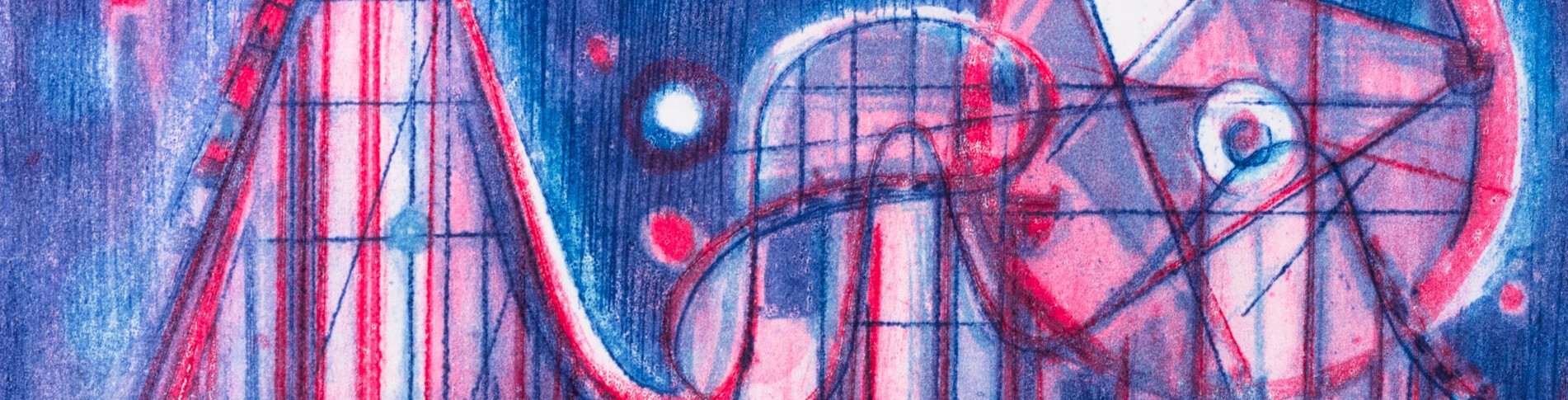
In this comparison, Pehap may be regarded as playful and exploratory—an artist driven by curiosity and a wide range of motifs. Yet more broadly and recognizably, his work is defined by a love for human figures and urban themes. As a consistent throughline, the artist portrays the relationship between people and the city, both indoors and in the streets, weaving these two elements into a single compositional ensemble and dialogue. Pehap is likely one of the most figure-oriented Pallas artists in Estonian art as a whole. Accordingly, the exhibition features couples and groups of people, portraits and nudes, as well as abstract experiments and a curiosity to express himself through minimalism or color geometry—each marked by a distinctly personal and recognizable stylistic approach.
 Not available
Participated in exhibition MODERN WORLD -
 Not available
Participated in exhibition MODERN WORLD -
 Not available
Participated in exhibition MODERN WORLD -
 Not available
Participated in exhibition MODERN WORLD -
 Not available
Participated in exhibition MODERN WORLD -

Participated in auction GRAPHIC ART CLASSICS
Participated in exhibition MODERN WORLD -
 Sold
Sold
Participated in auction ESTONIAN ART CLASSICS, PART II
Participated in exhibition MODERN WORLD -
 Not available
Participated in exhibition MODERN WORLD -
 Not available
Participated in exhibition MODERN WORLD -
 Not available
Participated in exhibition MODERN WORLD -
 Not available
Participated in exhibition MODERN WORLD -
 Not available
Participated in exhibition MODERN WORLD -
 Not available
Participated in exhibition MODERN WORLD -
 Not available
Participated in exhibition MODERN WORLD -
 Not available
Participated in exhibition MODERN WORLD -
 Not available
Participated in exhibition MODERN WORLD -
 Not available
Participated in exhibition MODERN WORLD -
 Not available
Participated in exhibition MODERN WORLD -
 Not available
Participated in exhibition MODERN WORLD -
 Sold
Sold
Participated in exhibition MODERN WORLD -
 Sold
Sold
Participated in exhibition MODERN WORLD -
Sold 2025
 Not available
Participated in exhibition MODERN WORLD -
 Not available
Participated in exhibition MODERN WORLD -
 Sold
Sold
Participated in exhibition MODERN WORLD -
Sold 2026
 Sold
Sold
Participated in exhibition MODERN WORLD -
Sold 2026
 Not available
Participated in exhibition MODERN WORLD -
 Not available
Participated in exhibition MODERN WORLD -
 Not available
Participated in exhibition MODERN WORLD -
 Not available
Participated in exhibition MODERN WORLD -
 Not available
Participated in exhibition MODERN WORLD -
 Not available
Participated in exhibition MODERN WORLD -
 Not available
Participated in exhibition MODERN WORLD -
 Not available
Participated in exhibition MODERN WORLD -
 Not available
Participated in exhibition MODERN WORLD -
 Not available
Participated in exhibition MODERN WORLD -
 Sold
Sold
Participated in exhibition MODERN WORLD -
Sold 2026
 Not available
Participated in exhibition MODERN WORLD -
 Not available
Participated in exhibition MODERN WORLD -