




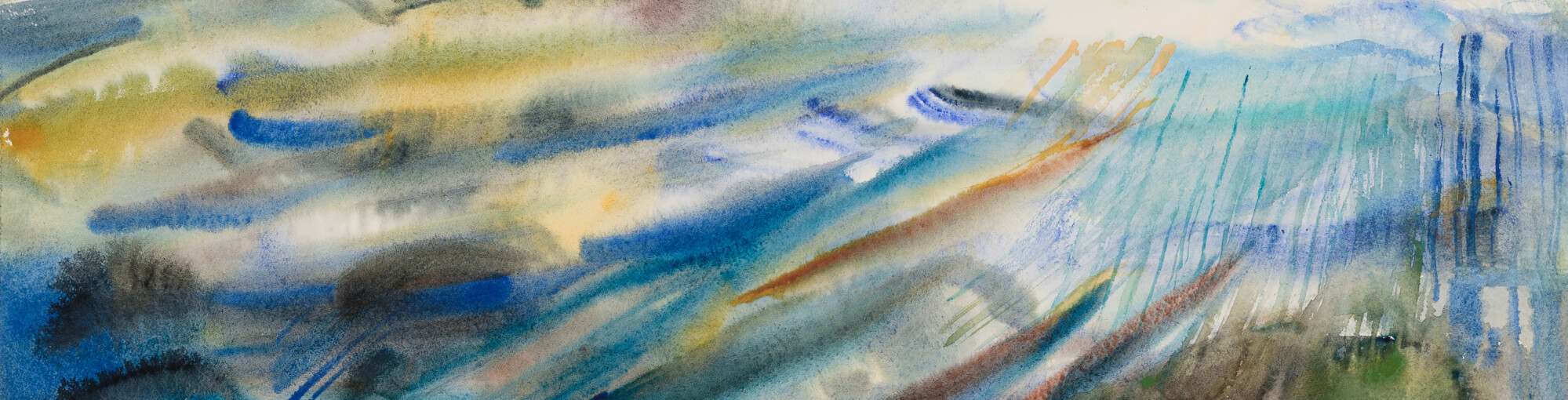


ENNO OOTSING EXHIBITION OF SELECTED WORKS
 -
-  Haus Gallery
Enno Ootsing celebrates his 85th anniversary! Having begun his artistic journey as a member of the ANK '64 group, Enno Ootsing is one of the most significant innovators in Estonian graphic art. His work combines technical mastery, creative freedom, and a constant drive to discover new forms of artistic expression. Whether in printmaking or painting, Ootsing's artworks are both timeless and ever-evolving – much like the artist himself.
Enno Ootsing’s 85th anniversary exhibition highlights the artist’s contribution to Estonian cultural life and offers insights into his creative mindset. However, this is not a comprehensive retrospective. As Ootsing himself notes, the exhibition at Haus Gallery is a curated selection of works, ranging from the 1970s to the present day.
As a member of avant-garde artist collective ANK '64, Ootsing belongs to the generation that brought fresh ideas to the Estonian art scene in the mid-1960s, challenging the rigid conventions of Soviet-era art. ANK '64 was a collective of graduates from the Estonian SSR State Art Institute (ERKI), including notable names such as Tõnis Vint, Aili Vint, Marju Mutsu, and Jüri Arrak. Although the group was short-lived, it expanded the boundaries of local art both formally and conceptually. Their styles were diverse, but united by a belief in creative freedom. Members drew inspiration from Western modernism (such as Op art, Surrealism, and Abstraction) as well as Eastern art traditions – Japanese woodcut techniques, for instance, are clearly reflected in Ootsing’s printmaking.
ANK '64 immersed itself in 20th-century modernism – art period that was omitted from official lectures. The group enthusiastically shared their knowledge among themselves and beyond, paving the way for innovation in Estonian art. Many of today’s most recognized modern artists, including Ootsing himself, trace their beginnings to this artist collective.
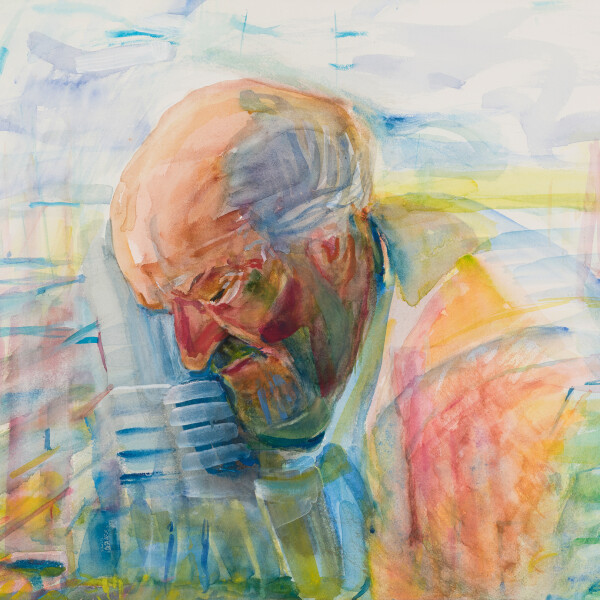
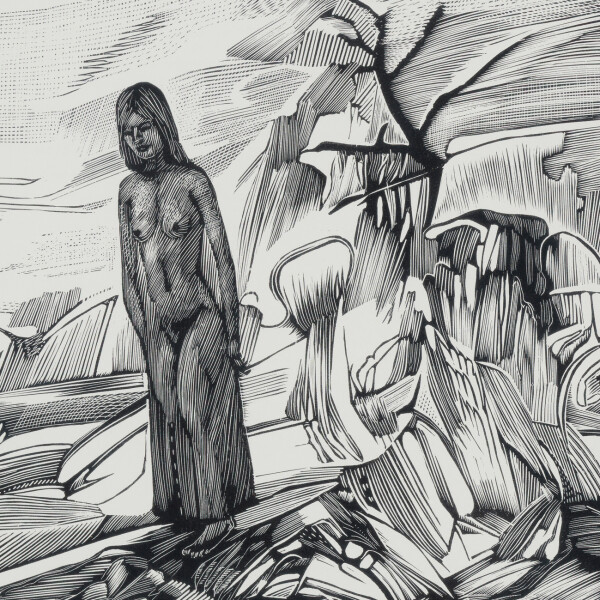
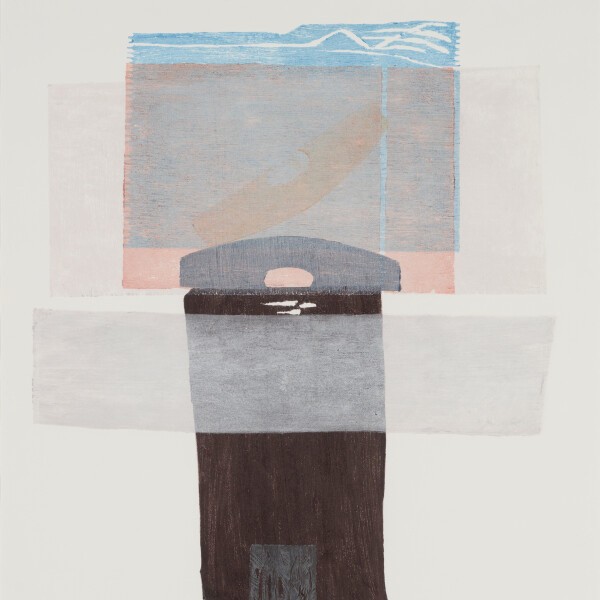
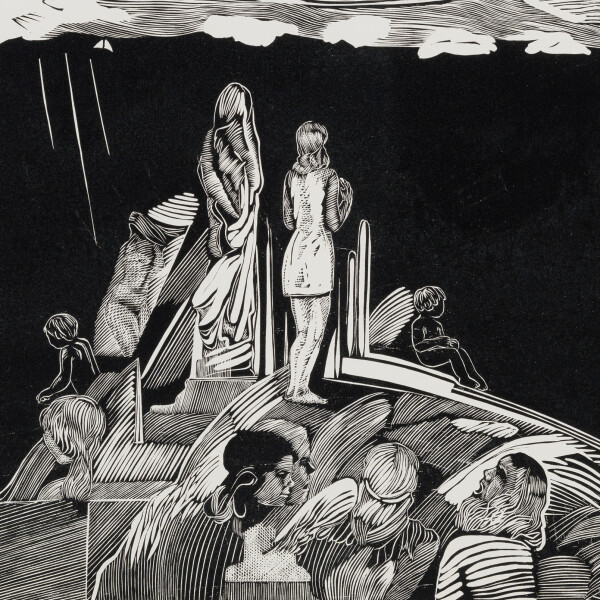
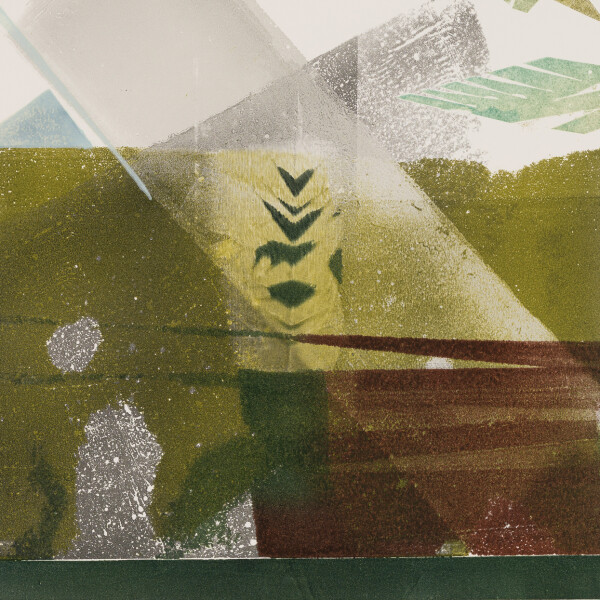
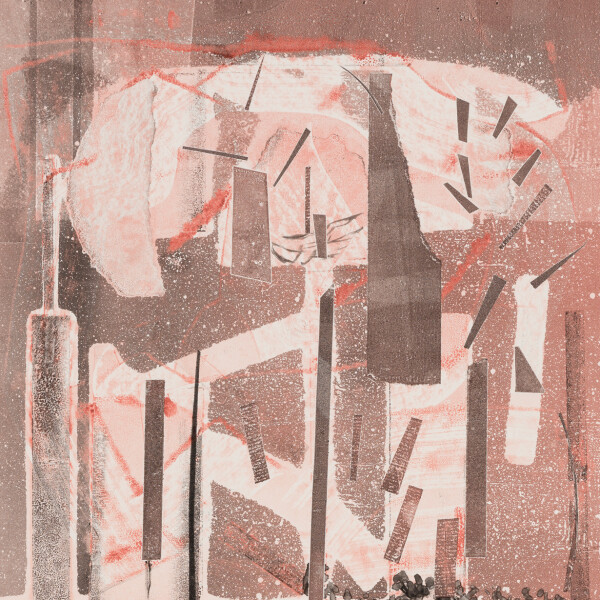
Like other members of ANK '64, Ootsing’s career is marked by dynamic evolution. He never confines himself to a single style or medium; his work reflects a continuous search for new artistic possibilities. While he has worked as a painter and watercolorist, his most lasting legacy lies in graphic art – particularly in linocut, woodcut, monotype, and etching. Technical mastery and sensitivity to materials are central to his work, allowing a rich diversity of thought and expression. His artworks feature bold contrasts, energetic crosshatched lines, delicate surfaces, and a harmonious use of color.
According to Ootsing, his creative process begins with an emotional impulse, and the chosen technique follows that mood. Each artwork captures a meaningful emotional moment, with subjects that often shift in theme and tone. Symbolism and abstraction are frequent undercurrents – as seen in works like Goodbye (1977), Archaic (1998), or Joyful Wanderer (2007), where symbolism merges with romanticism. The latter portrays a dreamlike figure gliding or walking gently through an inspiring natural landscape – likely a self-portrait of the artist as a cheerful soul immersed in art and nature. Spiritual motifs and reverence for nature are also recurring themes, evident in works such as Autumn Parnassus (1976), Time–November (1999), and Self-Portrait in August (2017).
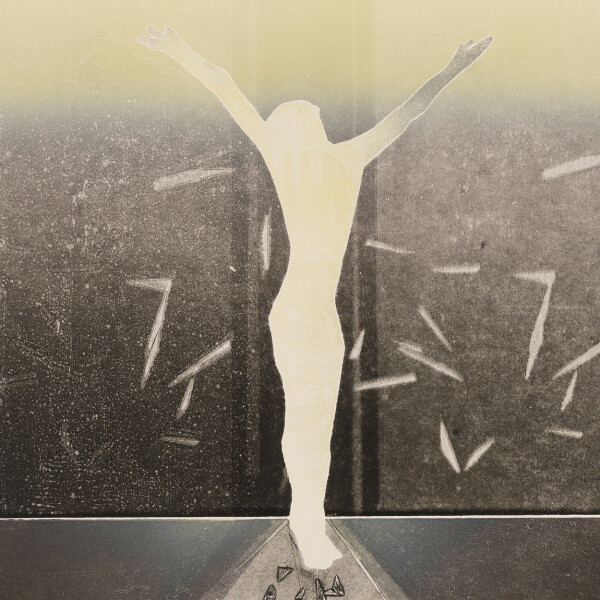
As a contemplative observer of life, Ootsing also reflects on society. His 1990 monotype The City Wakes up can be interpreted as a metaphor for rebuilding Estonia: the lower part of the image shows the fragmented, shadowed remnants of the past, while above, a human figure reaches upward into open space, full of light and hope. Several of his works from the 1990s feature the colors of the Estonian flag – blue, black, and white – often paired with lighter hues, as seen in Wanderers (1992) and The Weather Mill (1995).
Ootsing’s visual language evokes both emotional resonance and layered metaphor. His works invite the viewer into a symbolic world – one that reflects on the interplay of reality and imagination, full of poetic ambiguity and depth.
Born in Räpina in 1940, Enno Ootsing studied painting and art education at Tartu Art School, and later specialized in graphic art at ERKI (now the Estonian Academy of Arts). Although widely known as a freelance graphic artist and illustrator, he has also contributed significantly to art education – serving as lecturer, head of the graphic art department, and professor at ERKI/EAA. Since 2005, he has held the title of Professor Emeritus at the Estonian Academy of Arts.
Lola Annabel Kass, Haus Gallery's art historian
 Sold
Sold
Participated in exhibition EXHIBITION OF SELECTED WORKS -
Sold 2025
 Sold
Sold
Participated in exhibition EXHIBITION OF SELECTED WORKS -
Sold 2025
Participated in exhibition EXHIBITION OF SELECTED WORKS -
 Sold
Sold
Participated in exhibition EXHIBITION OF SELECTED WORKS -
Sold 2025
 Sold
Sold
Participated in exhibition EXHIBITION OF SELECTED WORKS -
Sold 2025

Participated in exhibition EXHIBITION OF SELECTED WORKS -
 Sold
Sold
Participated in exhibition EXHIBITION OF SELECTED WORKS -
Sold 2025

Participated in exhibition EXHIBITION OF SELECTED WORKS -

Participated in exhibition EXHIBITION OF SELECTED WORKS -

Participated in exhibition EXHIBITION OF SELECTED WORKS -

Participated in exhibition EXHIBITION OF SELECTED WORKS -

Participated in exhibition EXHIBITION OF SELECTED WORKS -
 Sold
Sold
Participated in exhibition EXHIBITION OF SELECTED WORKS -
Sold 2025
Participated in exhibition EXHIBITION OF SELECTED WORKS -

Participated in exhibition EXHIBITION OF SELECTED WORKS -
Participated in exhibition EXHIBITION OF SELECTED WORKS -
 Sold
Sold
Participated in exhibition EXHIBITION OF SELECTED WORKS -
Sold 2025
 Sold
Sold
Participated in exhibition EXHIBITION OF SELECTED WORKS -
Sold 2025