



Catalogue
AUTUMN AUCTION OF ESTONIAN ART 2025, PART III


 Haus Galleryi & online


WHO WE ARE IN OUR OWN ART
Over the years, Haus Gallery’s art auctions have become eagerly anticipated events. All the more so because each collection is a surprise in its own way – the works that emerge from private collections into the public eye at any given moment are largely unpredictable, and many are previously unknown and unique.
The 2025 autumn auction selection at Haus Gallery once again presents unexpected artistic discoveries, deepening our understanding and perception of the Estonian art mindscape.
There are dozens of artworks and artists here that could be listed as exceptional examples of art. However, in the interest of not favoring any particular one, we will leave the list unnamed. Instead, we invite you to read the exhibition catalogue, where art historians Eero Epner and Heie Marie Treier contribute insightful texts, offering a thorough opportunity to take a closer look and stroll along the main avenues of our art history.
This year’s catalogue is structured in three parts but follows an unbroken chronological line throughout, guided by the creation dates of the artworks. We begin with the earliest piece from 1891 and journey with the artists through the next century, decade by decade, up to the present day – the year 2025. That is exactly 134 years of art history, mapping facts, emotions, artistic movements, changes in styles, similarities and differences between artists, and stories of who we are through our art.
And indeed – who are we, if we look at ourselves through our art?
Are we the quiet landscapes of the early 20th century, solitary romantic heroes in ancient forests, visible and invisible observers before and within somber rural scenes? Those who breathe in the raw impressions of nature on riverbanks, in fields and floral arrangements, at tables where objects recall still lifes?
Or are we cities, progress, the brisk rhythms of industry and technology – thoughts striving toward cosmic heights? Or gatherings in cafés, people strolling through autumn streets?
Or are we the thinkers standing on this side of the artworks, simultaneously present in multiple realities – in the past, in the present, and in our own imagination? Linking our gaze from impressionist moments to postmodern experiments, where time and style no longer matter. Where the mythological iconography of old Europe and the experimentalism of the modern world become thought birds, figures, compositions of the past and present. Or are we the moment when the realism of soft forms transforms into a cubist system of art, into refined geometry, abstract expression, or an existential search within the human, the landscape, and the viewer themselves?
Artworks
1980s – ART TURNED ITS FOCUS INWARD
The 1980s was the last decade in which direct reflection of society in art was still uncommon. Artists explored a wide range of directions that allowed them to avoid confronting everyday Soviet life and ideology. They depicted forests and mountains, old cafés and plowing farmers, Tallinn’s Old Town and sailboats on the bay, abstract geometric forms, and large bouquets of flowers.
The reasons were diverse. Some artists had no desire to engage with daily life at all, seeking in art a higher dimension free from mundane concerns. Others focused exclusively on questions that could be addressed within art itself, delving deeply into their practice. There were those who believed art should offer comfort, joy, and reconciliation, and others who prioritized intellectual exercises, concepts, and provocation. Art, in many ways, turned inward from various perspectives, allowing for outcomes that were both highly diverse and profoundly thorough.

Oil, canvas. 45.5 × 35.5 cm

Drypoint, aquatint. 48.7 × 64.0 cm

Oil, canvas. 36.0 × 46.0 cm
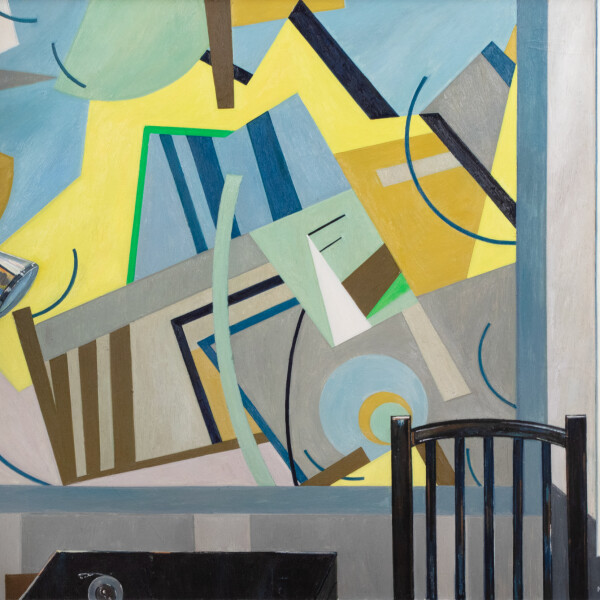
Oil, canvas. 115.0 × 140.0 cm
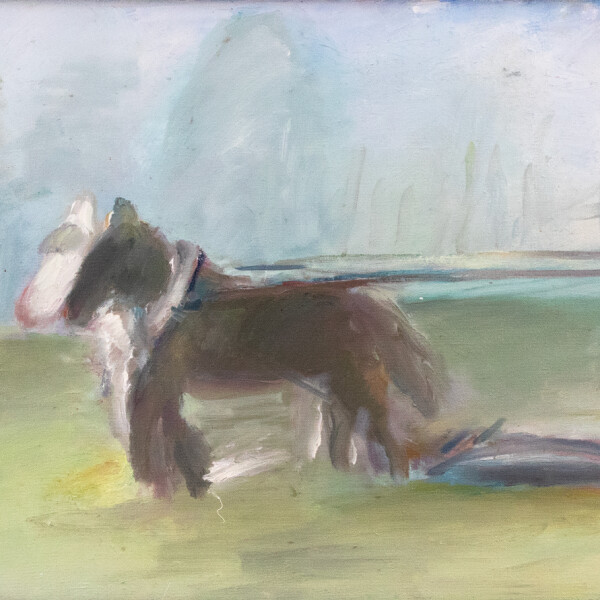
Oil, canvas. 51.0 × 110.5 cm

Oil, canvas. 50.0 × 70.0 cm

Mezzotint . 33.2 × 44.0 cm

Oil, canvas on cardboard. 69.5 × 50.0 cm

Watercolor. 35.3 × 37.0 cm
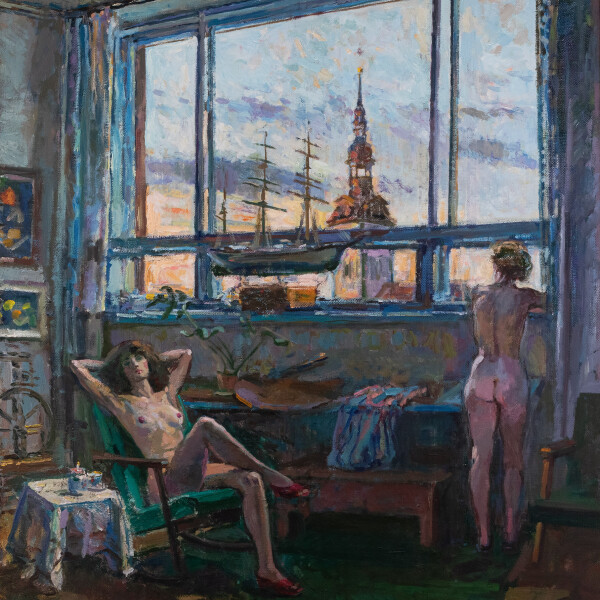
Oil on canvas. 110.0 × 100.0 cm

Ink, color pencil, paper. 47.0 × 60.0 cm

Oil, canvas. 50.0 × 73.0 cm

Oil, canvas. 81.0 × 70.5 cm

Oil, cardboard. 69.0 × 49.0 cm

Etching 7/20. 63.5 × 138.0 cm

Eau forte, aquatint . 24.5 × 30.5 cm

Mixed media, paper. 48.0 × 64.5 cm

Oil, masonite. 46.0 × 37.8 cm
990s – THE ART WORLD CHANGED BEYOND RECOGNITION
The 1990s transformed the art world beyond recognition, yet multiple directions emerged once again. On one hand, the decade was full of innovators, such as Marko Mäetamm; on the other, many artists who had already gained the attention of audiences and critics in the 1970s or earlier remained active. They continued working in their established styles — for example, Olev Subbi, Andres Tolts, Olav Maran, or Peeter Mudist.
It is therefore difficult to generalize about this decade, as artists often worked in even opposing styles. Almost every conceivable direction was explored, exhibitions were highly diverse, yet relatively few artists abandoned their practice altogether. Creators remained committed to their choices, producing both classical still lifes and nudes employing pop-art techniques. In this selection, the focus is primarily on artists who either continued along their established path or consciously adopted a more conservative approach, swimming against the current of the era.
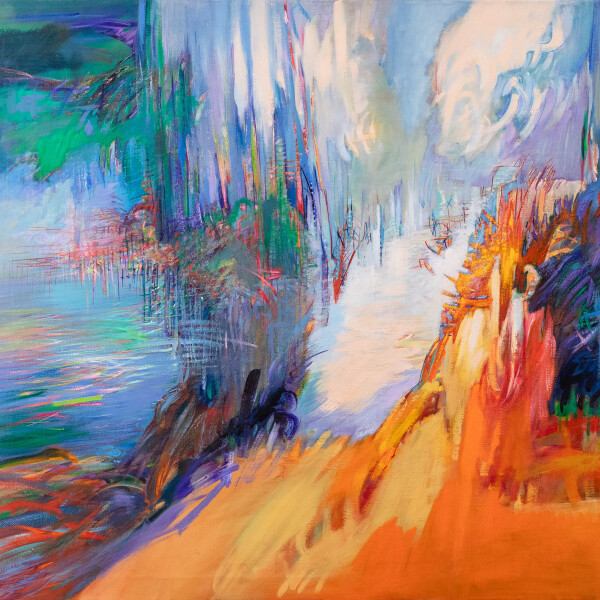
Oil, canvas. 92.0 × 130.0 cm
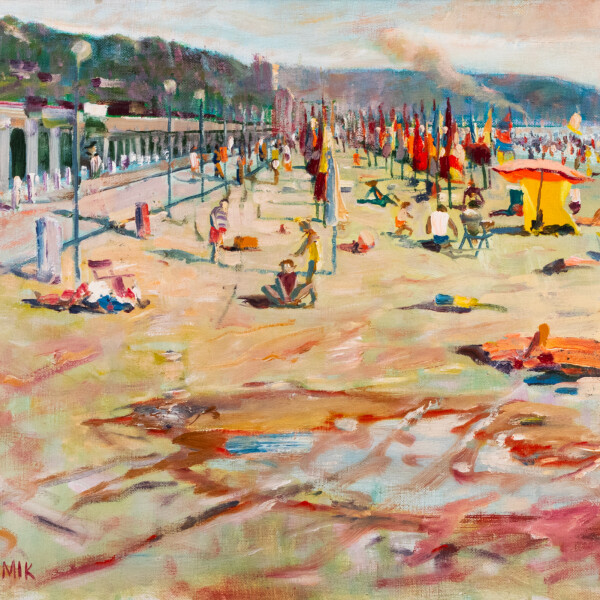
Oil, canvas. 65.0 × 92.0 cm

Oil, canvas. 81.0 × 100.0 cm

Oil, paper on cardboard. 76.0 × 50.2 cm

Tempera, gouache, paper. 46.8 × 63.2 cm

Oil, canvas on plywood. 60.0 × 80.0 cm

Oil, canvas. 80.0 × 100.0 cm
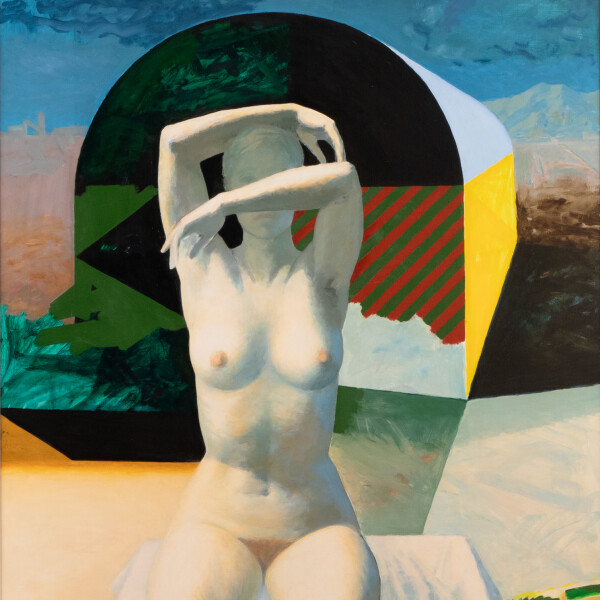
Acrylic, oil, masonite. 120.0 × 90.0 cm

Watercolor. 71.7 × 52.0 cm

Monoprint. 27.7 × 37.5 cm

Woodcut. 48.8 × 32.5 cm

Oil, canvas. 50.0 × 200.0 cm

Oil, mixed media, canvas. 85.5 × 99.0 cm
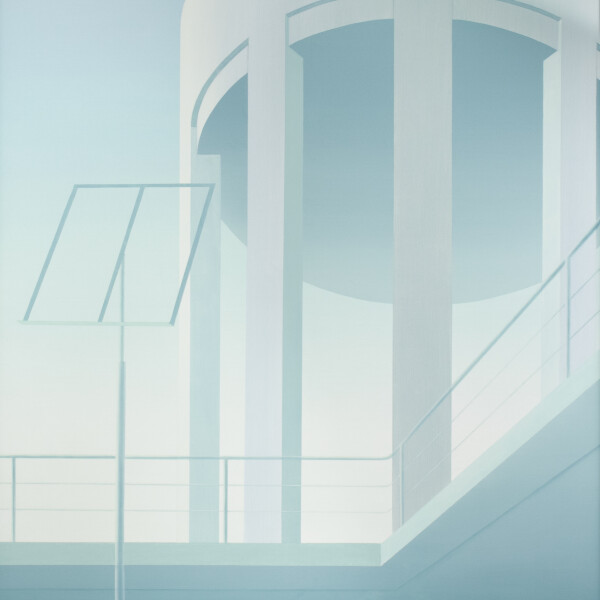
Oil, canvas. 150.0 × 135.0 cm

Watercolor. 36.0 × 48.0 cm
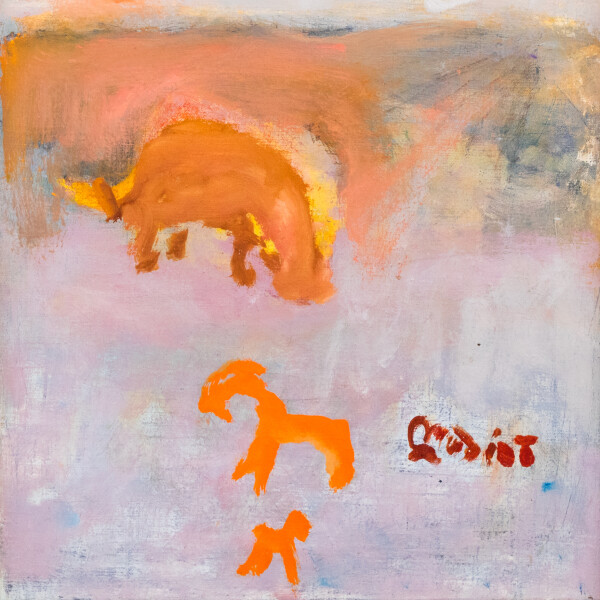
Oil, canvas. 54.0 × 48.0 cm

Mixed media, paper. 136.0 × 80.3 cm

Mixed media, paper. 25.7 × 19.0 cm
The 2000s
After the whirlwind of the 1990s, both society and the art scene settled down. This selection also clearly illustrates how, if not for the first time, then at least very noticeably, artists began to indulge in imaginative worlds. Instead of reflecting everyday life—or even starting from it—we see narratives that are difficult to anchor in reality. Surreal flows of free consciousness, myths and fairy tales, metaphysical visions, and similar themes moved Estonia’s previously fairly painterly art scene into entirely new territories. The 1990s had likely cleared the way for a wide range of experiments and many artists now immersed themselves in history, mythology, or personal fantasies.

Felt tip pen, paper. 18.0 × 27.4 cm

Oil, masonite. 60.0 × 90.0 cm

Oil, canvas. 153.0 × 95.0 cm

Oil, canvas. 40.0 × 50.0 cm
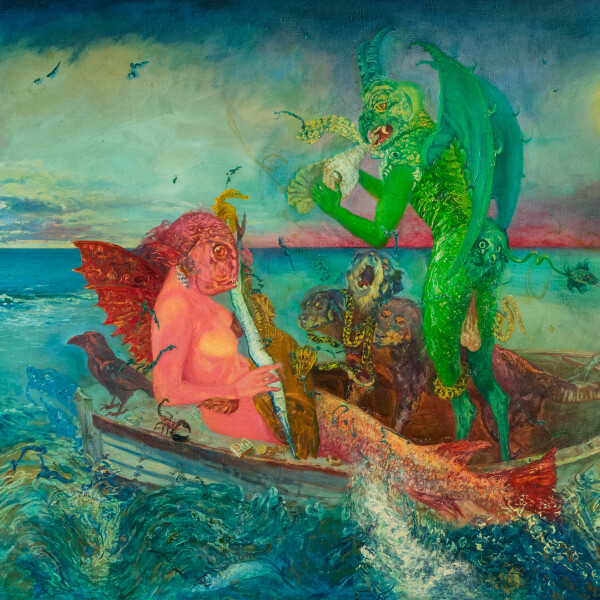
Oil, canvas. 127.0 × 165.0 cm

Oil, canvas. 100.0 × 120.0 cm

Oil, canvas. 80.0 × 100.0 cm
The 2010s
This selection illustrates the ways in which the classics of Estonian painting developed over their long careers. We see those whose style underwent virtually no change — artists who remained faithful to their chosen approach, continuing to find sufficient aesthetic and ethical inspiration within it. Olav Maran, Malle Leis, and Jüri Arrak were among those who, in their work, assembled ever-new compositions from more or less similar building blocks.
Alongside them were contemporaries like Tiit Pääsuke or Valeri Vinogradov, whose areas of interest remained largely consistent, yet who experimented with new techniques, leaps, and movements. Emerging beside them were younger artists whose work from the outset defied categorization — generalizations did not apply. These artists could work in documentary or surrealist modes, be colorful or minimalist, embracing a wide spectrum of approaches.
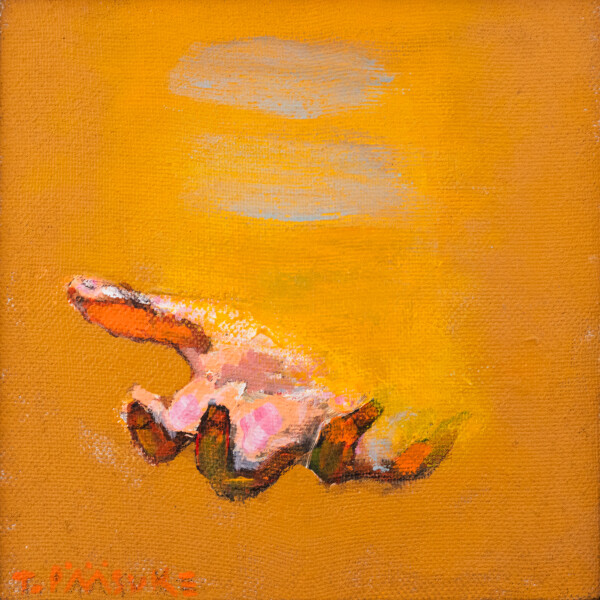
Acrylic, oil on canvas. 30.0 × 270.0 cm

Oil, cardboard. 22.0 × 27.0 cm

Etching, drypoint . 96.7 × 63.5 cm

Oil, canvas. 83.0 × 125.0 cm

Oil, canvas. 80.0 × 100.0 cm

Oil, canvas. 60.0 × 90.0 cm
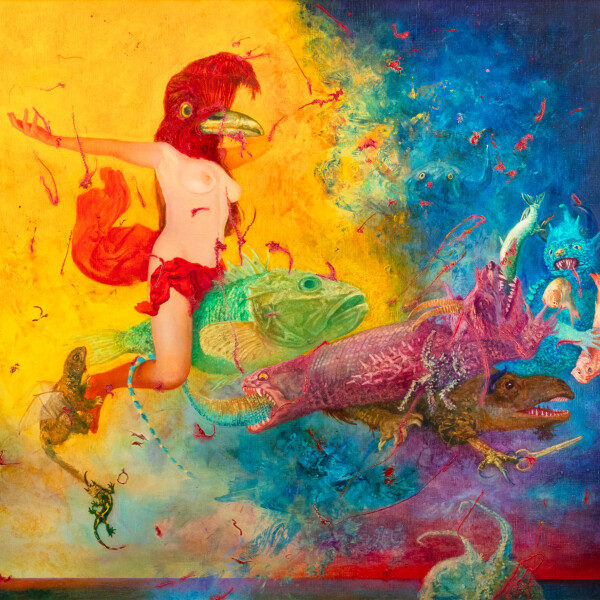
Oil, canvas. 140.5 × 154.5 cm

Acrylic, canvas. 70.0 × 50.0 cm
The 2020s
In contemporary art, no stasis has occurred. The art world is branched, with dozens of smaller artistic “nests.” Artists no longer work according to broad, era-wide trends but instead develop personal styles, themes and approaches. This selection largely highlights those creators who have for years or even decades worked with certain forms and motifs, deepening and continually exploring them: Siim Tanel-Annus with his sacral-infused abstraction, Vilen Künnapu with his colorfully exuberant cityscapes, Jan Tammik with his masterfully crafted still lifes and Orest Kormašov with works set in archaic environments.
Alongside them are artists who may alter their approach with almost every new work, refusing to be bound by fixed patterns.

Oil, canvas. 100.0 × 100.0 cm

Acrylic, canvas. 80.0 × 100.0 cm

Acrylic, canvas. 70.0 × 89.0 cm

Oil, canvas. 60.0 × 100.0 cm

Oil, canvas. 120.0 × 100.0 cm

Oil, canvas. 150.0 × 120.0 cm
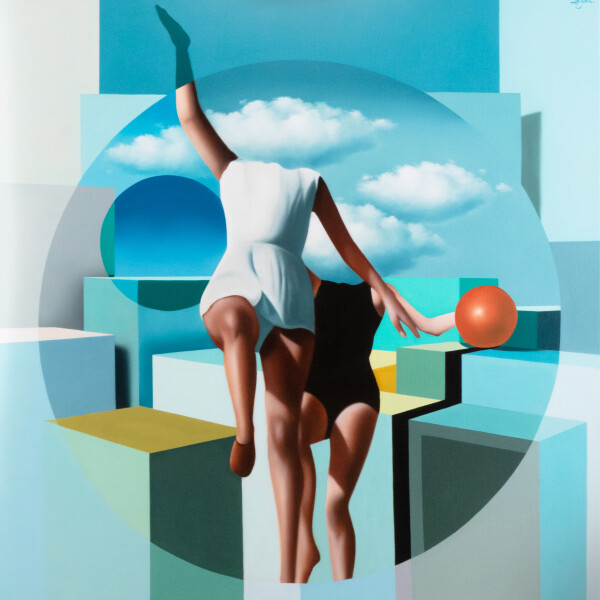
Oil, canvas. 110.0 × 100.0 cm

Acrylic, canvas on wood panel. 115.0 × 125.0 cm

Watercolor. 14.7 × 20.2 cm
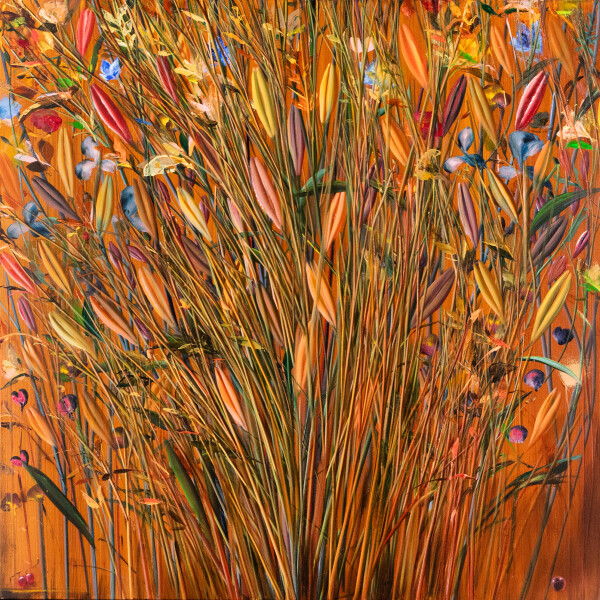
Oil, canvas. 96.0 × 96.0 cm